

Two Paths to Value. One Scientific Platform.
Clinical-stage therapeutics, patented nutraceuticals, proprietary cultivation, and an experienced leadership team create a diversified life sciences opportunity.
Led by Dr. Gene Zaid, the chemist who built and sold Jacam Chemical to CES Energy Solutions for roughly $300M5 before turning a plant from his homeland into a cancer therapeutics program.
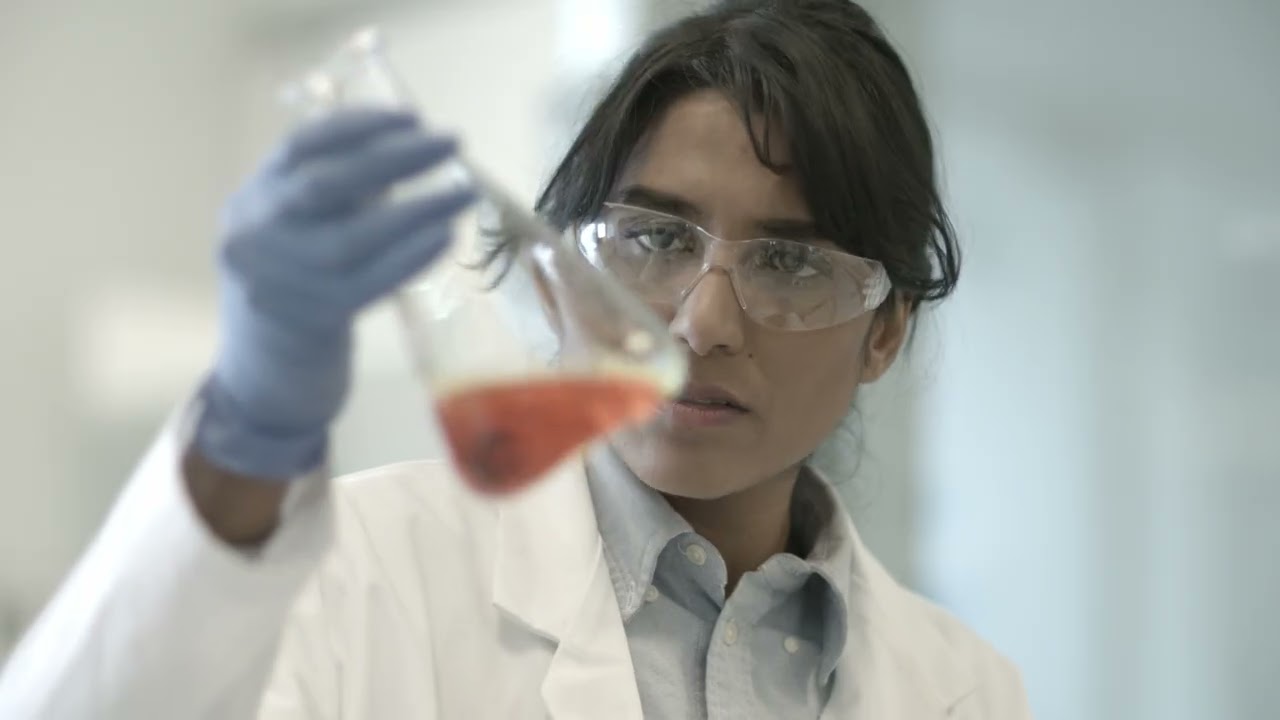
Watch: Dr. Gene Zaid on the plant, the pipeline, and the plan.


Top reasons to invest.
One company carrying a drug program and a selling business, run by someone who has built and exited before.
Hardest to treat is where the fewest options exist.
By the time a cancer has beaten every standard therapy, most patients and their families are out of road. Those are the tumors this program goes after, and they are the ones where a single added option can change everything. The need behind them is enormous, and it keeps growing.
NextGen starts somewhere unusual. Its lead compound traces back to a plant that families near Jerusalem have brewed against illness since the ninth century, carried forward now through modern clinical trials and its uses protected by a patent portfolio that runs to 2038.
Two engines, one plant.
Most early biotech is a single bet. One trial reads out badly and the company is finished. NextGen is built differently.
Genzada Pharmaceuticals
Oncology and dermatology candidates derived from the black calla lily, advancing through human trials. The lead agent, GZ17-6.02, targets difficult cancers across several tumor types.
- Lead candidate in Phase 11
- Collaborators include VCU, Duke & Johns Hopkins
- Patent portfolio protected through 2038
Hyatt Life Sciences
Plant-based consumer supplements grown and sold today. The line generates revenue now, proves real demand for the science, and keeps the company moving while the drug program matures.
Most early-stage drug plays ask you to bet on the science alone. This one runs two businesses at once. One is an oncology pipeline with years of upside ahead. The other sells supplements and generates revenue now. You are backing both.
A pure clinical-stage company is worth a great deal if the drug works and roughly nothing if it does not. A revenue-generating supplement business puts a floor under the valuation even if the drug program is delayed or terminated.
Operating cash flow reduces dependence on the dilutive milestone-driven financing rounds that pure-play developers rely on, which matters most in tight capital markets.
One realistic exit becomes three: license the drug, sell the supplement business to a consumer-health acquirer, or keep operating independently with supplement revenue funding development.
The dual-pathway model only works when the underlying science can credibly support two products in two regulatory categories. Most synthetic-chemistry programs cannot; botanical and natural-product programs often can.
$300 million reasons to invest.
Dr. Gene Zaid
Born in a refugee camp outside Jerusalem, Gene Zaid came to Kansas with almost nothing, earned a PhD in chemistry, and founded Jacam Chemical out of a garage in the early 1980s. He grew it into one of the most respected names in oilfield chemistry and sold it to CES Energy Solutions, a publicly traded firm, for roughly $300M.5
Then he went back to a plant from his homeland, the black calla lily, the same one his community used as folk medicine for generations, and started Genzada to turn it into cancer therapeutics. He holds more than fifty patents.
"I never give up. Failure is not an option." Dr. Gene Zaid, Founder
Four decades of building, in dates.
The pitch rests on a track record. Here is the path from a garage in Kansas to a published cancer trial.
Some dates are approximate and being confirmed against company records.
Plant-based drugs are re-entering the pipeline.
For thirty years the industry chased purely synthetic molecules. It did not deliver: 80–90% of projects still fail before human trials, and 95% of those that reach the clinic fail there. The math is bringing botanical discovery back.
Aspirin came from willow bark. Morphine from the opium poppy. Digoxin from foxglove. Taxol, a landmark cancer drug, from the Pacific yew. Vincristine from the Madagascar periwinkle. Artemisinin, a 2015 Nobel Prize in Medicine, from sweet wormwood.
Mass spectrometry and NMR can now characterize, quantify, and synthesize the active compounds in a complex plant extract in days. Phenotypic discovery — start from an effect, work back to the mechanism — favors botanical starting points.
The 2016 Botanical Drug Development Guidance created a regulatory route for plant-derived drugs that does not require isolating a single molecule. Two — Veregen and Mytesi — are already approved, and modern oncology's comfort with combination therapy welcomes multi-compound drugs.
From a folk remedy to two patented candidates.
People across the Middle East have used the black calla lily (Arum palaestinum) as medicine for centuries. Genzada isolated and synthesized the plant's active compounds, then developed them into a pair of prescription candidates that are delivered in different ways.
GZ17-6.02 is an oral capsule. Genzada has taken it into human trials across multiple tumor types, working with academic and contract research partners.
GZ21T is a topical cream. It is being developed for actinic keratosis, a precancerous skin condition, along with related disorders that current options treat poorly.
Both come from the same plant. On the supplement side, Hyatt grows that plant in dedicated greenhouses, so the company controls its material from soil to finished product.
GZ17-6.02 and GZ21T are investigational and have not been approved by the FDA for any use. Statements about the drug programs are forward-looking. Hyatt supplements are not intended to diagnose, treat, cure, or prevent any disease.
Most cancer drugs unscrew lightbulbs. This one flips the breaker.
Picture a house with hundreds of lights. You could climb a ladder in every room and unscrew each bulb — or walk to the basement and flip the master breaker.
Most cancer drugs work like the ladder: they target one specific protein, in one specific cancer, in one specific patient. GZ17-6.02 works like the breaker. It acts as a super-enhancer modulator, hitting the master switches that sit above the genes — the controls that tell other genes when to turn on and off.
Because it cuts the signal upstream rather than at a single target, one drug has shown activity against cancers as different as breast, prostate, colorectal, lung, head and neck, brain (glioblastoma), and skin. Cut the signal at the source, and everything downstream feels it.
GZ17-6.02 is investigational and has not been approved by the FDA for any use. Mechanism described from peer-reviewed and company sources; early results do not guarantee later outcomes.
The conventional approach. Powerful when it works, but narrow — effective in one cancer, in the patients whose tumor depends on that exact target.
GZ17-6.02's approach. Acting on the regulatory genes upstream is why preclinical and Phase 1 data show activity across eight tumor types.
Where the clinical programs stand.
The lead candidate has moved out of the lab and into people. Here is the path, and what sits behind it.
· 1B at VCU
· 1B starting
What the Phase 1 readout showed
Phase 1 patients are the toughest cases in oncology. By the time they enroll, they have run through nearly every approved therapy and watched each one stop working, so their bodies are worn down and their cancer has adapted to whatever it faced before. That context is what gives the readout its weight. Among roughly 40 evaluable patients, one with non-small cell lung cancer saw a partial response, several more held stable, and the trial recorded zero adverse events. Getting a tumor to shrink or hold still in people who have run out of options is a hard-won signal.
Results reported from the GZ17-6.02 Phase 1 trial in patients with advanced solid tumors and lymphoma, with a 23.5% overall clinical benefit rate against 15–20% for current options, published in Annals of Oncology (2021). GZ17-6.02 is investigational and not approved by the FDA. Early results do not guarantee later outcomes. See disclosures.
Already past the "valley of death"
Most drug candidates die in the stretch between lab research and the first human trial — the industry calls it the valley of death. GZ17-6.02 has already crossed it.
GZ17-6.02 cleared the FDA review required to test in humans, completed Phase 1, published peer-reviewed results, and is enrolling Phase 1B at a major U.S. cancer center — each step eliminates candidates that could not survive contact with reality. Failure-rate figures per the National Institutes of Health; timeline per Springer Translational Medicine Communications (2019).
Opportunities for Monetization
We are advancing two assets, and we believe each one offers more than a single way to return value to shareholders. Our intention is to take each program to a point where a larger pharmaceutical partner carries it forward, then license or sell. We do not plan to push either drug all the way to a new drug application ourselves.
Phase 1A is complete, and the program is now in Phase 1B with late-stage prostate patients in Virginia. We believe Phase 2 data is the point where 6.02 becomes most valuable to a buyer. Drug developers often wait for Phase 2 results before they commit, which is why we intend to target that window for a sale or a licensing deal.
Phase 1A is complete, and Phase 1B for actinic keratosis is about to begin in Sweden and the Netherlands. We believe 21T could reach a licensing or sale conversation sooner than 6.02, possibly as early as the close of this Phase 1B.
Every phase we clear takes risk out of the asset, and a de-risked molecule is worth more to an acquirer. A company with deeper capital will often pay a premium to step in later in the race. That gives us and our investors a real decision at each stage: accept an earlier offer with less risk remaining, or carry the program one phase further and aim higher. We intend to weigh each opportunity on its own terms as it arrives.
These are possible future scenarios, not commitments. Timing and outcomes depend on trial results, patient enrollment, and partner interest, and we cannot guarantee any of them.
Hyatt: science behind the tradition.
People across the Middle East have used Arum palaestinum for more than 1,200 years. Hyatt Life Sciences is the first to commercialize it as a modern supplement, and it sells today.
This is where the science meets a paying customer. The line brings in revenue now, carries the company between clinical milestones, and feeds back real demand for the same plant the drug program is built on.
Selling the black calla lily in the U.S. food supply meant going to the FDA directly. NextGen completed New Dietary Ingredient notifications for both Arum palaestinum and Peganum harmala — a multi-year process involving animal toxicology, manufacturing data, and safety review. By the company's account, it is the only U.S. entity with both cleared.
The plant does not grow naturally in Kansas, so the company built six climate-controlled greenhouses in Sterling — ranging from 60×100 to 80×120 ft — and believes it is the only operation growing it at commercial scale anywhere in the U.S. Products sell through Walmart.com and the company's own store.3
The product line — sold under names like Afaya Plus and Arum-Flex — targets immune support, glucose regulation, inflammation, and overall vitality, and is protected by two granted U.S. patents (10,772,347 and 11,246,902). Supplements almost never carry patents — most shelves are full of look-alike bottles anyone can copy.
The two programs run under one corporate umbrella but stay strictly separated by regulation: the drug under the Federal Food, Drug, and Cosmetic Act, the supplement under DSHEA (1994), where specific disease claims are not permitted.
Formulated to support these areas of everyday wellness. These statements have not been evaluated by the Food and Drug Administration. Hyatt products are not intended to diagnose, treat, cure, or prevent any disease.
Two markets, one platform.
NextGen sits across cancer therapeutics and the wellness economy, a platform the company frames against a $3.3 trillion global market.
The inflammation angle reaches further still. The CDC reports 40.1M Americans with diabetes and another 115M with prediabetes — roughly 155M people whose conditions trace back to chronic inflammation — a market the supplement line's glucose- and inflammation-support formulations are built to address. CDC National Diabetes Statistics Report. Supplements are not intended to diagnose, treat, cure, or prevent any disease.
One asset, three ways to win.
A pure clinical-stage developer typically has one realistic exit. The dual-pathway structure opens at least three. None is promised.
License the drug
As GZ17-6.02 is de-risked through Phase 2/3, a larger pharmaceutical company could license or acquire the program — the standard clinical-stage exit.
Sell the supplement business
Hyatt — patented, FDA-cleared ingredients, retail distribution, revenue today — is a stand-alone asset a consumer-health acquirer could buy independent of the drug's outcome.
Operate independently
Keep both under one roof: supplement revenue funds ongoing drug development, reducing dependence on dilutive raises while the pipeline matures.
Any return depends on a future event such as one of these. Each is a possibility, not a commitment, and the units could still lose all value. Read the risk factors in the PPM.
Operators and scientists, not first-timers.
A founder who has built and sold a company, a drug-development veteran, and academic research standing behind the molecule.
Two of the four executives have direct operational experience with a successful nine-figure exit. Two have published peer-reviewed work in the company's exact therapeutic area.
Deal terms.
Deal terms
- SecurityLLC Units
- Price per unit$4.08
- Minimum$25,092
- EligibilityAccredited, verified
- Maximum offering$10,009,872
- Broker-dealer of recordTexture Capital
- ClosesDec 31, 2026
Read this part carefully.
This is a private placement, and it carries real risk. The units are illiquid. There is no public market for them, no ticker, and no listing on the calendar. Plan to hold for an indefinite period, and invest only what you could afford to lose entirely. Any return would depend on a future event such as an acquisition, and none is promised.
Invest because you believe in the science and the operator, with money you have set aside for high-risk bets.
Where the money goes
- GZ17-6.02 cancer research & preclinical48%
- GZ21T topical compound research20%
- New pipeline development13%
- Manufacturing capacity9%
- Supplement marketing & advertising5%
- General & administrative5%
Allocation of the current $10M Regulation D offering, per the company's investor FAQ. Confirm against the PPM before publishing.
FAQs.
Yes. NextGen Scientific accepts investments from self-directed IRAs (SDIRAs) and certain self-directed 401(k) plans. The investment is made by your retirement account, not by you personally, with shares held by your custodian on your behalf.
Investing through a retirement account offers several practical advantages:
- Tax treatment that matches the investment timeline. Private placements like this one are typically held for several years before any liquidity event. Holding shares inside a Traditional IRA or 401(k) lets returns compound on a tax-deferred basis until you take distributions in retirement. A Roth IRA or Roth 401(k) provides tax-free growth on qualified withdrawals.
- Diversification beyond public markets. Most retirement accounts are concentrated in publicly traded stocks, bonds, and mutual funds. A private placement gives your retirement portfolio exposure to early-stage healthcare development that does not move in lockstep with public market cycles.
- A long-term horizon that aligns with private investing. Retirement accounts are designed to be held for years or decades. A pre-IPO private placement is also illiquid for an extended period. The two timelines fit together naturally.
To invest through a retirement account, you will need a self-directed IRA custodian (such as Equity Trust, Alto, or STRATA Trust Company). Texture Capital, our broker-dealer, works with custodians familiar with this process and can help guide you through the steps. Speak with your tax advisor about whether this approach fits your retirement plan and overall financial circumstances.
NextGen's founder and chief scientist, Gene Zaid, was born just outside Jerusalem and grew up watching family members use the black calla lily, scientifically known as Arum palaestinum, as a traditional remedy. The plant has been documented in Middle Eastern medical literature since the 9th century AD.
Zaid moved to the United States in 1969, eventually built a chemistry company called Jacam Chemicals in Sterling, Kansas, and sold it to CES Energy Solutions in 2013 for ~$300 million. He used the proceeds to do what he had been thinking about for decades: apply modern medicinal chemistry to a plant his family had trusted for generations.
Selling the black calla lily in the U.S. food supply required engaging directly with the FDA. NextGen completed New Dietary Ingredient notifications for both Arum palaestinum and Peganum harmala, a multi-year regulatory process involving safety studies and data submission. To the company's knowledge, it is the only entity in the United States with both notifications cleared.
Today, NextGen grows the plant in six greenhouses in the same small-town Kansas community where Jacam was built, and operates its drug and supplement programs from there.
The Phase 1 trial of GZ17-6.02 enrolled patients with advanced solid tumors and lymphoma, all of whom had already failed multiple prior therapies. The results, published in Annals of Oncology in 2021, showed biological activity across eight tumor types and no Grade 4 or Grade 5 adverse events across the patient sample.
One non-small cell lung cancer patient saw measurable tumor shrinkage. Several other patients experienced stable disease, which in late-stage cancer is considered a meaningful clinical result. Company data indicates tumor regression of up to 34 percent in some cases and a 23.5 percent overall clinical benefit rate, compared with 15 to 20 percent for currently available treatments.
GZ17-6.02 completed FDA Phase 1 with zero serious adverse events across eight tumor types, and the compound has now moved into an investigator-initiated Phase 1B trial at Virginia Commonwealth University, where researchers are testing it in patients with advanced prostate cancer.
The two businesses are built on the same plant but operate under distinct regulatory frameworks. The clinical pipeline targets cancer through FDA-regulated drug trials, where the timeline to commercialization typically spans a decade or more. The supplement line, sold through Hyatt Life Sciences, generates revenue now and provides direct customer feedback on the underlying science.
Running both creates a real floor under the company: if the drug program faces delays, the supplement business continues to bring in cash and build the brand. It also reduces dependence on dilutive financing rounds tied to clinical milestones, which matters in tight capital markets.
The supplement business is patented, FDA-cleared for its key ingredients, and already distributed through both Walmart.com and the company's own e-commerce site.
Gene Zaid founded Jacam Chemical in his garage in Sterling, Kansas in 1982. Jason West joined as president in 2009 and led the company through 430 percent revenue growth before its sale to CES Energy Solutions in 2013 for ~$300 million.
The same two people are now driving NextGen. They bring hands-on experience scaling a complex chemistry-focused business, navigating a successful exit, and operating from rural Kansas with global ambitions.
The team's pharmaceutical capabilities are reinforced by Stefan Proniuk, PhD, MBA, Chief Science Officer with leadership roles previously at Neuraptive, Arno Therapeutics, Neurocrine Biosciences, and Cima Labs, and by Cameron West, MD, MBA, COO and practicing dermatologist trained at the University of Kansas School of Medicine.
The current $10 million Regulation D offering funds the next phase of development across both pathways. Capital is allocated:
- 48 percent to GZ17-6.02 research and preclinical work for the cancer program
- 20 percent to research on the topical GZ21T compound
- 13 percent to new pipeline development
- 9 percent to manufacturing capacity
- 5 percent to marketing and advertising for the supplement business
- 5 percent to general and administrative expenses
NextGen Scientific and affiliates have raised approximately $75 million to date, supporting active clinical programs targeting cancer and dermatological conditions while scaling a portfolio of science-backed supplements already generating revenue.
Hear it from the people building it.
Not ready to invest yet? Join a live session with the team, hear the thesis first-hand, and ask your questions before you decide.
- Walk through the drug pipeline and the Phase 1 results
- See how the supplement business funds the science
- Meet the founder and the team, live
- Ask anything, then get the PPM and the next steps
NextGen Scientific Investor Webinar
A live presentation and Q&A with the team, around 45 minutes. Free to join, and a replay goes to everyone who registers.
Register to Join